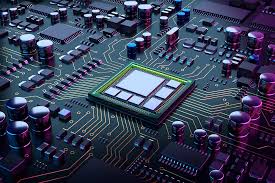
The motherboard is an essential component of a computer, acting as the main printed circuit board (PCB) that interconnects all the critical hardware components, including the CPU (Central Processing Unit), RAM (Random Access Memory), storage devices, and peripherals. It serves as a communication hub that facilitates data exchange between these various parts, allowing them to work in unison.
Often referred to as the “nervous system” of the computer, the motherboard plays a vital role in maintaining the overall functionality and performance of the system. It houses numerous slots and connectors that enable the installation of other components, such as graphics cards, sound cards, and network interfaces. Additionally, it includes power supply connectors that deliver the necessary electrical power to each hardware part.
Moreover, the motherboard is equipped with a chipset that manages data flow between the processor and memory, as well as between other critical components. It also often integrates features like BIOS/UEFI firmware, which is responsible for booting the computer and managing data transfer processes. Overall, the motherboard is a foundational element that ensures every part of the computer functions together effectively, enabling the user to perform tasks efficiently and seamlessly.


 FutureTech
Leave a comment