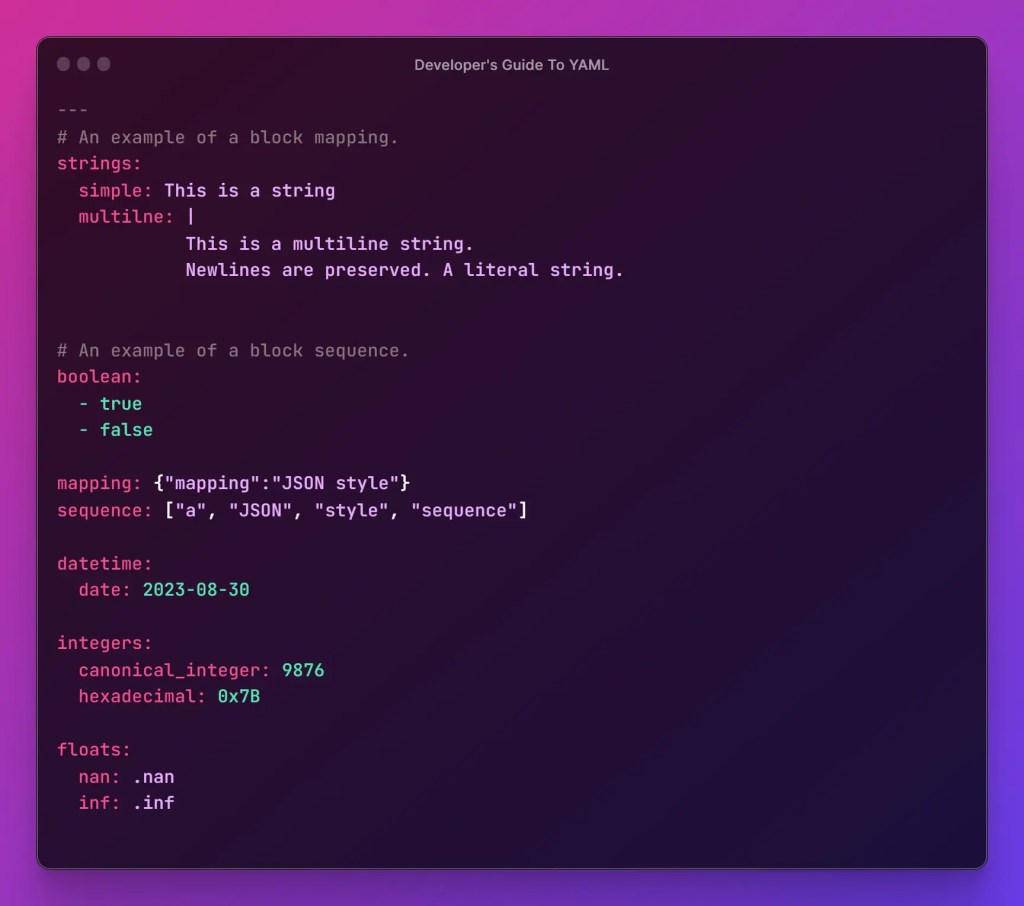
YAML simplifies data serialization and configuration management, making it an invaluable tool in modern software development. Its human-readable format allows developers and system administrators to easily create and manage complex configurations without getting bogged down in syntax. This attribute of simplicity and clarity is particularly important in environments where configurations can change frequently, enabling quick updates and modifications without the fear of introducing errors.
YAML is widely used in various applications, including Kubernetes for container orchestration, where it defines the desired state of deployments, services, and configuration settings. Additionally, it plays a pivotal role in cloud deployments across multiple platforms by facilitating the easy exchange of settings and data between different services. Moreover, in software automation, YAML serves as a powerful format for defining workflows and processes, often integrated within CI/CD pipelines to streamline deployment processes.
Many developers appreciate the ease with which they can represent complex data structures, like lists and dictionaries, using YAML. This feature not only enhances productivity but also decreases the likelihood of mistakes that can occur when using more verbose formats like XML or JSON. The combination of simplicity, readability, and versatility has solidified YAML’s reputation as a favorite among developers and system administrators across various domains, allowing them to focus more on solving problems rather than getting caught up in cumbersome syntax.




 FutureTech
Leave a comment