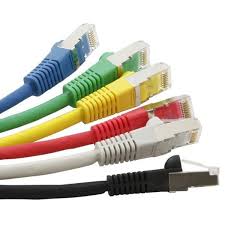
Ethernet is a standard communication technology widely utilized to connect devices in local area networks (LANs) through physical cables. It forms the backbone of many networking environments, facilitating efficient and reliable communication between computers, printers, servers, and other devices.
One of the most significant advantages of Ethernet is its ability to provide high-speed, low-latency data transfer, making it an optimal choice for various settings, including corporate offices, gaming setups, and enterprise environments.
The design of Ethernet allows for fast data transmission, which is crucial for applications requiring rapid data exchange and minimal delay, such as video conferencing, online gaming, and large file transfers.
Ethernet supports a range of speeds to accommodate different needs, including 100 Mbps (Fast Ethernet), 1 Gbps (Gigabit Ethernet), and even up to 10 Gbps (10 Gigabit Ethernet). This versatility means that as the demands for bandwidth increase, networks can be upgraded with minimal disruption to accommodate higher speeds, ensuring long-term usability and scalability.
In addition to speed, Ethernet offers more stability and security compared to Wi-Fi networks. Wired connections are less susceptible to interference and signal degradation, which can be a concern with wireless networks. This reliability is essential for large data transfers and critical operations where network downtime can result in significant disruptions or losses.
Moreover, Ethernet provides enhanced security features through the use of physical cabling. Unlike Wi-Fi, which broadcasts signals that can be intercepted by unauthorized users, wired connections require physical access to the network. This makes it much harder for unauthorized individuals to gain access, resulting in a more secure networking environment.
Overall, Ethernet remains a foundational technology that continues to evolve, adapting to the increasing demands for speed, security, and efficiency in data communication. Its robustness ensures that it will remain a preferred choice for networking solutions well into the future.

 FutureTech
Leave a comment